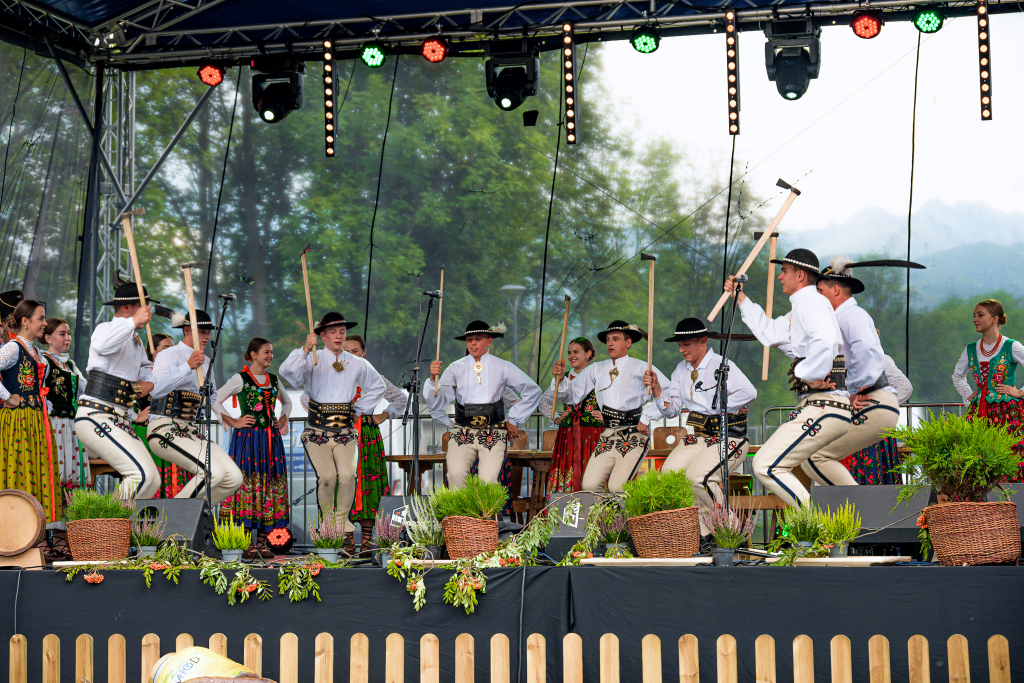





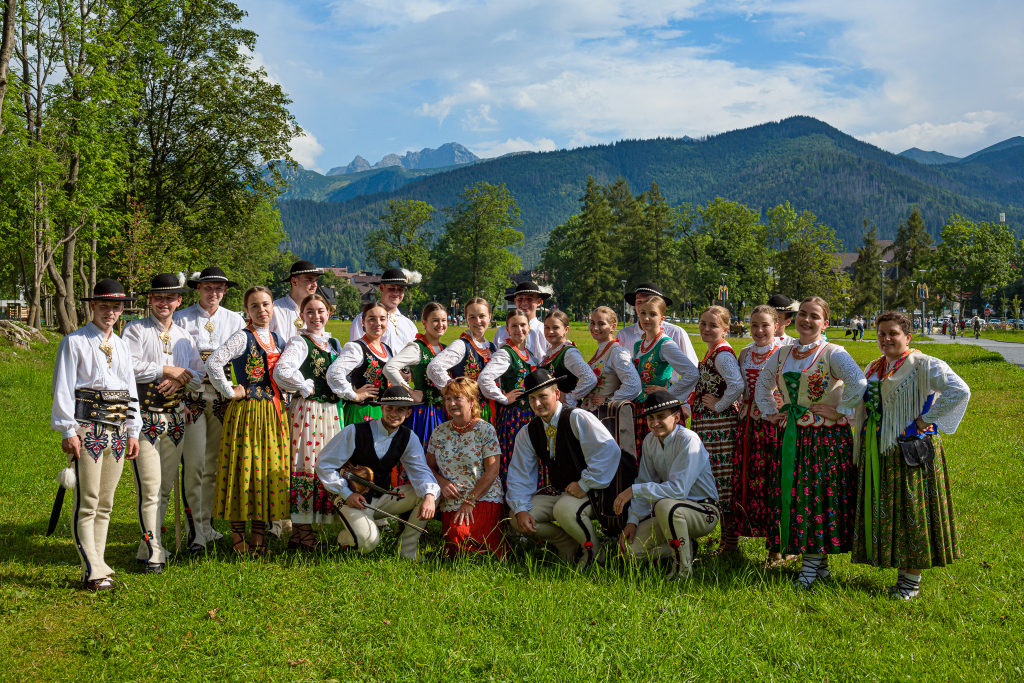
The School Regional Ensemble “Budorze” was officially established in 1969 at the Dr. Władysław Matlakowski Construction School Complex in Zakopane, one of the oldest schools in Poland, operating continuously since 1876. Historical records, however, indicate that the ensemble had existed earlier as an informal group. It was founded by teachers of the Construction Technical School: Eng. Wiesław Białas, Barbara Knapik, M.A., and Wojciech Brzega, with the aim of preserving and promoting the folklore of the Podhale region.
The late Jan Gut-Mostowy, who served for many years as the ensemble’s director, once wrote:
“The beginnings of the ensemble date back to 1947. It was formed by young people from the surrounding villages who came to the school to learn the crafts of construction and carpentry. They brought Highland singing and dancing with them from their family homes. Gathered into one group, they created an ensemble that performed at school ceremonies and local community events.”
The ensemble’s name is derived from the school’s educational profile. In the Podhale dialect, budorz refers to a skilled craftsman who has mastered the art of building traditional wooden houses.
Throughout more than fifty-five years of official activity, “Budorze” has taken part in numerous events, competitions, and folk festivals in Poland and abroad, earning many prestigious awards. Among its greatest achievements are the Golden Ciupaga and the Special Ciupaga, awarded at the International Festival of Mountain Folklore in 1986 and 1990.
On 2 May 2026, during the Jubilee Gala celebrating the 150th anniversary of the Dr. Władysław Matlakowski Construction School Complex in Zakopane, the School Regional Ensemble “Budorze” was awarded the honorary distinction “Meritorious for Polish Culture” by the Minister of Culture and National Heritage. This prestigious honour recognizes all the generations who have officially formed the “Budorze” Ensemble for nearly sixty years, as well as those who contributed to its unofficial beginnings in the late 1940s, continuing its tradition to the present day.